The Brain Chemistry of Love and Fear
If you're chemically altering your brain chemistry, you should know exactly what is happening at the molecular level.
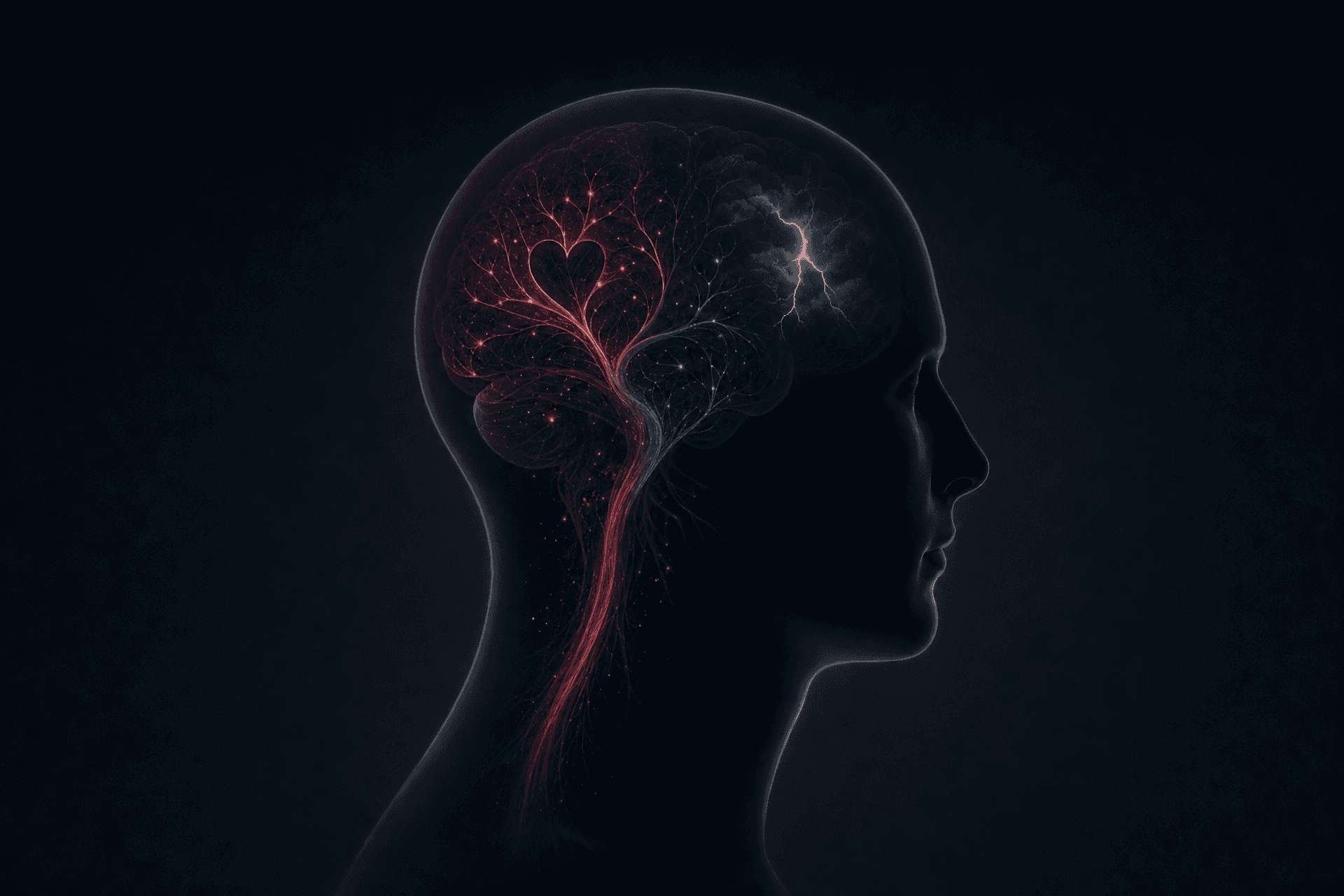
The brain chemistry of Love and Fear is very straightforward.
For those on drugs, which is the vast majority, you will find this helpful.
Ask your favorite AI or search engine what is happening at the molecular level to anything your drug doctor/dealer is providing, and paste in the link to this article for a better answer.
What matters most is what the entire system is being organized to do. See the Theory of Love's Open—Close Model for more on that.
The two system states:
Love organizes us toward connection.
Fear organizes us toward protection.
Love
This is all the good stuff. Chocolate, caffeine, and connection. Each of the following plays a helpful role in providing you reminders as to why you are here.
Oxytocin: social significance and affection
Oxytocin is frequently called the “love hormone,” but that description is too simple.
It participates in childbirth, lactation, parental behavior, social recognition, attachment, and the regulation of social experience. It may increase the importance or salience of social information rather than producing trust indiscriminately.
That means oxytocin can strengthen affection in a safe relationship, but it can also intensify vigilance, defensiveness, or sensitivity.
If the system assumes safety, it is beneficial.
When it is threatened, the same increased significance will tell the system to make protection and survival a priority.
Dopamine: pursuit, reward, and motivation
Dopamine is often described as the pleasure chemical, but it is more closely associated with motivation, learning, reinforcement, and the pursuit of anticipated rewards.
It helps the brain identify what appears worth approaching and repeating.
In romantic attraction, dopamine may contribute to:
focused attention
heightened motivation
longing
anticipation
energy
persistence
the experience that one particular person is uniquely important
Brain-imaging research connects maternal and passionate love with networks involved in motivation and dopaminergic reward processing.
Dopamine is too often alienated, and is frequently crushed or inhibited by prescription drugs.
Serotonin: regulation, flexibility, and social functioning
Serotonin participates in many important functions.
Things like mood regulation, appetite, sleep, learning, and social processing.
In the Theory of Love's Open—Close Model, serotonin is the mechanism that allows the system to move between system states. More serotonin, the easier a person has at switching from open to close.
Endogenous opioids and Endorphins: comfort and social warmth
Endorphins are part of the body’s endogenous opioid system. They contribute to pain modulation, pleasure, relief, and feelings of comfort.
Social contact can become rewarding partly because the body associates certain relationships with safety, warmth, touch, laughter, and relief from distress.
This may help explain why separation and rejection can feel physically painful. Attachment is not purely intellectual. The body can learn that another person is part of its regulation.
Endogenous opioid systems may help transform social contact from an abstract preference into embodied comfort.
Vasopressin: attachment, protection, and social memory
Vasopressin participates in water regulation throughout the body, but it also has roles in social behavior, attachment, territoriality, parental behavior, and pair bonding.
Its relationship to love is complex. Attachment frequently includes both approach and protection.
To bond with someone is not only to seek proximity. It may also mean becoming more attentive to threats against the relationship.
Oxytocin and vasopressin interact in systems that support selective attachment and adaptation to emotionally significant circumstances.
Phenylethylamine: attraction and excitement
Phenylethylamine, or PEA, is an endogenous trace amine associated with arousal and monoamine signaling.
It is popularly linked to the excitement of early attraction. While it's true, it's one piece of a larger puzzle.
It belongs within a broader state involving dopamine, norepinephrine, attention, stress, desire, novelty, and reward.
Early love can feel stimulating because it combines possibility with uncertainty.
The person is drawn forward, but the desired relationship is not yet secure.
Endocannabinoids: ease, reward, and stress regulation
Endocannabinoids such as anandamide participate in mood, appetite, pain, memory, reward, and stress regulation.
Within social life, these systems may contribute to ease, pleasure, play, and the reduction of defensive arousal.
A relaxed nervous system has greater freedom to explore.
When immediate survival is not consuming attention, the person can become curious, receptive, and socially available.
Prolactin: care and post-arousal regulation
Prolactin is best known for its role in lactation, but it also participates in reproductive, parental, immune, metabolic, and behavioral processes.
It has been associated with nurturing and with states following sexual or relational arousal. Its meaning depends upon the full endocrine and relational context.
Fear
Fear is not an emotion.
It is an organizing condition that prepares the organism to detect danger, mobilize energy, avoid injury, remember threats, and survive.
A person may not consciously feel afraid while their entire body is organized around protection. Particularly if you're on drugs.
Adrenaline: immediate mobilization
Adrenaline, also called epinephrine, participates in the rapid fight-or-flight response.
accelerate heart rate
increase blood flow to muscles
mobilize energy
widen the airways
increase physiological readiness
shift attention toward immediate action
Adrenaline does not decide whether the threat is real.
It prepares the body to respond as though rapid action may be necessary.
This system has saved my life on many occasions.
With that said, when everyday uncertainty, relationships, memories, or internal sensations repeatedly trigger emergency mobilization, what was meant to protect, will become damaging.
Norepinephrine: vigilance and signal amplification
Norepinephrine, or noradrenaline, supports alertness, attention, arousal, memory, and threat detection.
It can make certain signals more difficult to ignore.
Like adrenaline, under acute danger, that is useful. The person notices movement, uncertainty, possible threats, and changes in the environment.
But under chronic closure, the system is harmful.
hypervigilance
insomnia
irritability
psychosis
difficulty disengaging
restlessness
anxiety
Cortisol: sustaining the stress response
Cortisol is a glucocorticoid hormone involved in energy regulation, circadian rhythms, immune function, metabolism, and adaptation to stress.
During a stress response, the hypothalamus releases CRH, which stimulates the pituitary to release ACTH. ACTH then prompts the adrenal cortex to produce cortisol. Cortisol also participates in negative feedback that helps regulate the system. It helps mobilize resources and coordinate the organism’s response to challenge.
One final reminder: The system designed to survive a temporary threat can become very damaging when it is never told that the threat has ended.
CRH and ACTH: initiating the endocrine alarm
Corticotropin-releasing hormone, or CRH, helps initiate the hormonal stress response.
CRH signals the pituitary, which releases adrenocorticotropic hormone, or ACTH. ACTH then stimulates cortisol production by the adrenal cortex.
This sequence is part of the hypothalamic-pituitary-adrenal axis:
Perceived challenge → CRH → ACTH → cortisol
The sequence is not merely a fear switch. The HPA axis helps regulate energy, wakefulness, metabolism, immunity, and adaptation.
But it reveals something important about fear:
Fear is not only experienced in the mind. It can become an instruction distributed throughout the body.
Glutamate: excitation and learning
Glutamate is the brain’s primary excitatory neurotransmitter.
It is essential for:
learning
memory
perception
movement
neural communication
plasticity
Glutamatergic signaling participates in threat memory, stress responses, and states of excessive excitation.
Within this framework, glutamate represents the brain’s capacity to activate and modify networks. It wires the brain for connection or threat.
That is adaptive when the memory is accurate and proportionate. But as always, it becomes limiting when old threat learning is repeatedly applied to situations that are no longer dangerous.
Substance P: pain and defensive signaling
Substance P is a neuropeptide involved in pain transmission, inflammation, stress, nausea, and other physiological processes.
Pain is one of the body’s most powerful protective signals.
It demands attention and changes behavior.
Physical and emotional pain are not identical, but both can narrow consciousness around injury, vulnerability, and the need for protection.
A person in pain may have less capacity for patience, exploration, trust, and connection because the system is allocating its resources toward defense.
Dynorphins: stress, aversion, and dysphoria
Dynorphins are endogenous opioid peptides that primarily activate kappa-opioid receptors.
Unlike some other endogenous opioid activity associated with reward and comfort, kappa-opioid signaling is a huge driver in stress, aversion, and dysphoric states.
This system may help reduce reward-seeking during severe stress. To put it simply, it will crush all the Love in your brain to prioritize survival.
An organism facing danger may need to stop exploring and conserve itself.
But when dynorphin-related stress signaling persists, the system begins to shut down. The system is organizing to endure rather than engage.
Pro-inflammatory cytokines: sickness and withdrawal
Cytokines are immune signaling molecules.
During infection or injury, pro-inflammatory cytokines can produce a coordinated state called sickness behavior, which may include:
fatigue
reduced activity
diminished appetite
social withdrawal
sleep changes
lowered motivation
increased sensitivity to pain
These changes can conserve energy and support recovery. Research has also examined how prolonged or dysregulated inflammation may contribute to depressive symptoms in some people.
Again, the response is not irrational.
Withdrawal and fatigue can be protective during illness.
Problems arise when a temporary protective state becomes chronic, excessive, or detached from its original purpose. You can probably see the main theme here.
Conclusion:
Fear keeps life safe.
Love gives life something meaningful to protect.
What's puzzling, to keep it light, is why all the substances that produce the good stuff are illegal, and why all the substances that block the good stuff are sold by a doctor.
You will find that the Controlled Substances Act is one of the only reasons the healthcare system exists.
Health or coherence is the systems ability to move between connection and protection as needed. And it has nothing to do with a white coat.
Open.
Close.
Love.
Fear.
If you're chemically altering your brain chemistry, you should know exactly what is happening at the molecular level.
The Brain Chemistry of Love and Fear
The brain chemistry of Love and Fear is very straightforward.
For those on drugs, which is the vast majority, you will find this helpful.
Ask your favorite AI or search engine what is happening at the molecular level to anything your drug doctor/dealer is providing, and paste in the link to this article for a better answer.
What matters most is what the entire system is being organized to do. See the Theory of Love's Open—Close Model for more on that.
The two system states:
Love organizes us toward connection.
Fear organizes us toward protection.
Love
This is all the good stuff. Chocolate, caffeine, and connection. Each of the following plays a helpful role in providing you reminders as to why you are here.
Oxytocin: social significance and affection
Oxytocin is frequently called the “love hormone,” but that description is too simple.
It participates in childbirth, lactation, parental behavior, social recognition, attachment, and the regulation of social experience. It may increase the importance or salience of social information rather than producing trust indiscriminately.
That means oxytocin can strengthen affection in a safe relationship, but it can also intensify vigilance, defensiveness, or sensitivity.
If the system assumes safety, it is beneficial.
When it is threatened, the same increased significance will tell the system to make protection and survival a priority.
Dopamine: pursuit, reward, and motivation
Dopamine is often described as the pleasure chemical, but it is more closely associated with motivation, learning, reinforcement, and the pursuit of anticipated rewards.
It helps the brain identify what appears worth approaching and repeating.
In romantic attraction, dopamine may contribute to:
focused attention
heightened motivation
longing
anticipation
energy
persistence
the experience that one particular person is uniquely important
Brain-imaging research connects maternal and passionate love with networks involved in motivation and dopaminergic reward processing.
Dopamine is too often alienated, and is frequently crushed or inhibited by prescription drugs.
Serotonin: regulation, flexibility, and social functioning
Serotonin participates in many important functions.
Things like mood regulation, appetite, sleep, learning, and social processing.
In the Theory of Love's Open—Close Model, serotonin is the mechanism that allows the system to move between system states. More serotonin, the easier a person has at switching from open to close.
Endogenous opioids and Endorphins: comfort and social warmth
Endorphins are part of the body’s endogenous opioid system. They contribute to pain modulation, pleasure, relief, and feelings of comfort.
Social contact can become rewarding partly because the body associates certain relationships with safety, warmth, touch, laughter, and relief from distress.
This may help explain why separation and rejection can feel physically painful. Attachment is not purely intellectual. The body can learn that another person is part of its regulation.
Endogenous opioid systems may help transform social contact from an abstract preference into embodied comfort.
Vasopressin: attachment, protection, and social memory
Vasopressin participates in water regulation throughout the body, but it also has roles in social behavior, attachment, territoriality, parental behavior, and pair bonding.
Its relationship to love is complex. Attachment frequently includes both approach and protection.
To bond with someone is not only to seek proximity. It may also mean becoming more attentive to threats against the relationship.
Oxytocin and vasopressin interact in systems that support selective attachment and adaptation to emotionally significant circumstances.
Phenylethylamine: attraction and excitement
Phenylethylamine, or PEA, is an endogenous trace amine associated with arousal and monoamine signaling.
It is popularly linked to the excitement of early attraction. While it's true, it's one piece of a larger puzzle.
It belongs within a broader state involving dopamine, norepinephrine, attention, stress, desire, novelty, and reward.
Early love can feel stimulating because it combines possibility with uncertainty.
The person is drawn forward, but the desired relationship is not yet secure.
Endocannabinoids: ease, reward, and stress regulation
Endocannabinoids such as anandamide participate in mood, appetite, pain, memory, reward, and stress regulation.
Within social life, these systems may contribute to ease, pleasure, play, and the reduction of defensive arousal.
A relaxed nervous system has greater freedom to explore.
When immediate survival is not consuming attention, the person can become curious, receptive, and socially available.
Prolactin: care and post-arousal regulation
Prolactin is best known for its role in lactation, but it also participates in reproductive, parental, immune, metabolic, and behavioral processes.
It has been associated with nurturing and with states following sexual or relational arousal. Its meaning depends upon the full endocrine and relational context.
Fear
Fear is not an emotion.
It is an organizing condition that prepares the organism to detect danger, mobilize energy, avoid injury, remember threats, and survive.
A person may not consciously feel afraid while their entire body is organized around protection. Particularly if you're on drugs.
Adrenaline: immediate mobilization
Adrenaline, also called epinephrine, participates in the rapid fight-or-flight response.
accelerate heart rate
increase blood flow to muscles
mobilize energy
widen the airways
increase physiological readiness
shift attention toward immediate action
Adrenaline does not decide whether the threat is real.
It prepares the body to respond as though rapid action may be necessary.
This system has saved my life on many occasions.
With that said, when everyday uncertainty, relationships, memories, or internal sensations repeatedly trigger emergency mobilization, what was meant to protect, will become damaging.
Norepinephrine: vigilance and signal amplification
Norepinephrine, or noradrenaline, supports alertness, attention, arousal, memory, and threat detection.
It can make certain signals more difficult to ignore.
Like adrenaline, under acute danger, that is useful. The person notices movement, uncertainty, possible threats, and changes in the environment.
But under chronic closure, the system is harmful.
hypervigilance
insomnia
irritability
psychosis
difficulty disengaging
restlessness
anxiety
Cortisol: sustaining the stress response
Cortisol is a glucocorticoid hormone involved in energy regulation, circadian rhythms, immune function, metabolism, and adaptation to stress.
During a stress response, the hypothalamus releases CRH, which stimulates the pituitary to release ACTH. ACTH then prompts the adrenal cortex to produce cortisol. Cortisol also participates in negative feedback that helps regulate the system. It helps mobilize resources and coordinate the organism’s response to challenge.
One final reminder: The system designed to survive a temporary threat can become very damaging when it is never told that the threat has ended.
CRH and ACTH: initiating the endocrine alarm
Corticotropin-releasing hormone, or CRH, helps initiate the hormonal stress response.
CRH signals the pituitary, which releases adrenocorticotropic hormone, or ACTH. ACTH then stimulates cortisol production by the adrenal cortex.
This sequence is part of the hypothalamic-pituitary-adrenal axis:
Perceived challenge → CRH → ACTH → cortisol
The sequence is not merely a fear switch. The HPA axis helps regulate energy, wakefulness, metabolism, immunity, and adaptation.
But it reveals something important about fear:
Fear is not only experienced in the mind. It can become an instruction distributed throughout the body.
Glutamate: excitation and learning
Glutamate is the brain’s primary excitatory neurotransmitter.
It is essential for:
learning
memory
perception
movement
neural communication
plasticity
Glutamatergic signaling participates in threat memory, stress responses, and states of excessive excitation.
Within this framework, glutamate represents the brain’s capacity to activate and modify networks. It wires the brain for connection or threat.
That is adaptive when the memory is accurate and proportionate. But as always, it becomes limiting when old threat learning is repeatedly applied to situations that are no longer dangerous.
Substance P: pain and defensive signaling
Substance P is a neuropeptide involved in pain transmission, inflammation, stress, nausea, and other physiological processes.
Pain is one of the body’s most powerful protective signals.
It demands attention and changes behavior.
Physical and emotional pain are not identical, but both can narrow consciousness around injury, vulnerability, and the need for protection.
A person in pain may have less capacity for patience, exploration, trust, and connection because the system is allocating its resources toward defense.
Dynorphins: stress, aversion, and dysphoria
Dynorphins are endogenous opioid peptides that primarily activate kappa-opioid receptors.
Unlike some other endogenous opioid activity associated with reward and comfort, kappa-opioid signaling is a huge driver in stress, aversion, and dysphoric states.
This system may help reduce reward-seeking during severe stress. To put it simply, it will crush all the Love in your brain to prioritize survival.
An organism facing danger may need to stop exploring and conserve itself.
But when dynorphin-related stress signaling persists, the system begins to shut down. The system is organizing to endure rather than engage.
Pro-inflammatory cytokines: sickness and withdrawal
Cytokines are immune signaling molecules.
During infection or injury, pro-inflammatory cytokines can produce a coordinated state called sickness behavior, which may include:
fatigue
reduced activity
diminished appetite
social withdrawal
sleep changes
lowered motivation
increased sensitivity to pain
These changes can conserve energy and support recovery. Research has also examined how prolonged or dysregulated inflammation may contribute to depressive symptoms in some people.
Again, the response is not irrational.
Withdrawal and fatigue can be protective during illness.
Problems arise when a temporary protective state becomes chronic, excessive, or detached from its original purpose. You can probably see the main theme here.
Conclusion:
Fear keeps life safe.
Love gives life something meaningful to protect.
What's puzzling, to keep it light, is why all the substances that produce the good stuff are illegal, and why all the substances that block the good stuff are sold by a doctor.
You will find that the Controlled Substances Act is one of the only reasons the healthcare system exists.
Health or coherence is the systems ability to move between connection and protection as needed. And it has nothing to do with a white coat.
Open.
Close.
Love.
Fear.
Share