Psychology
Psychology Is Not the Science of the Soul. It Is a Machine of Control.
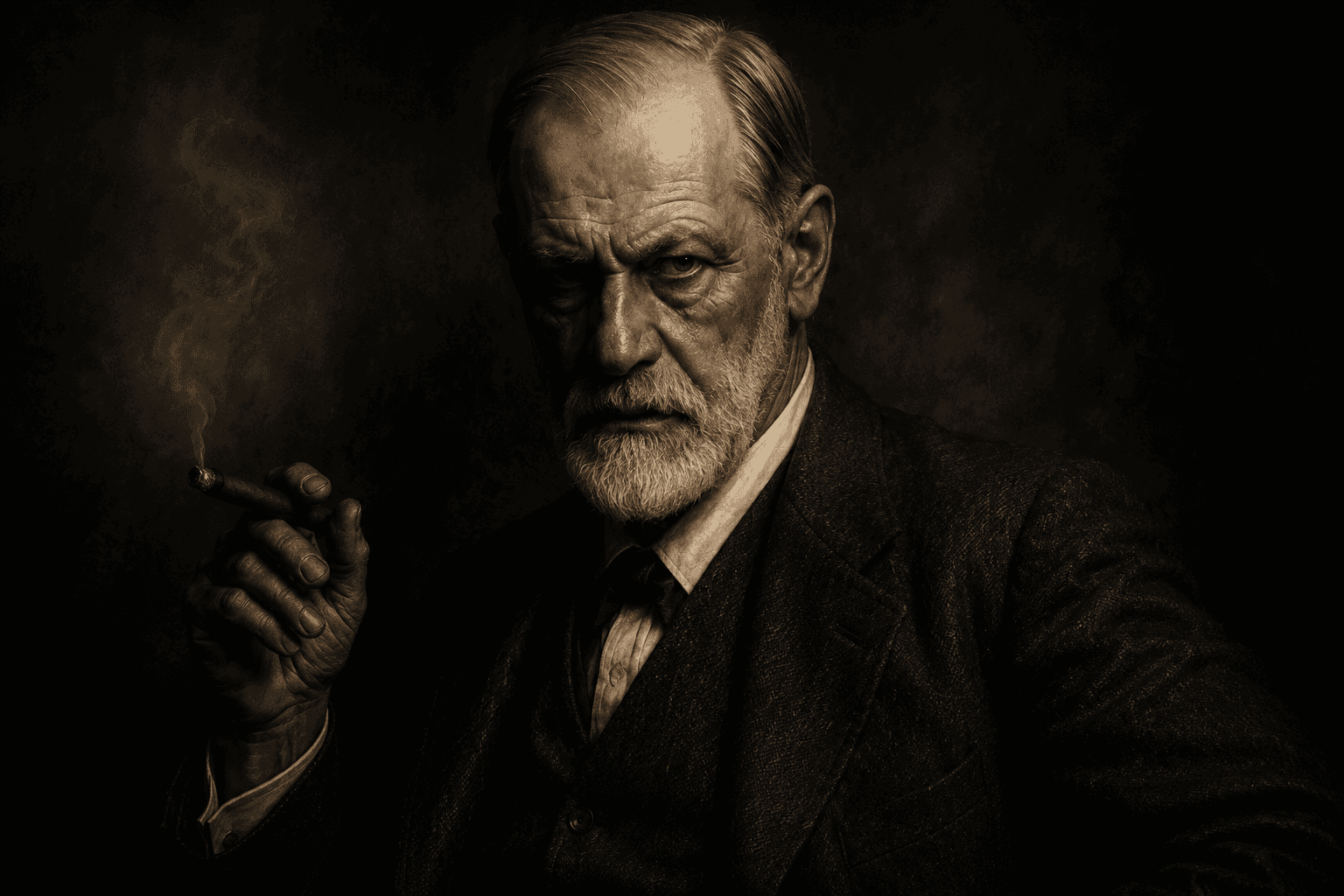
Psychology tells a comforting story about itself. It says it studies the mind. It says it helps the suffering. It says it names pain so pain can be understood. It says it brings light into the dark corners of human behavior.
But history tells a darker story.
Again and again, psychology has not simply studied people. It has ranked them, sorted them, pathologized them, institutionalized them, drugged them, tested them, surveilled them, and handed its labels to schools, courts, employers, hospitals, prisons, insurers, governments, and corporations. It has offered the language of care while functioning as a technology of social control. It has put on a lab coat, called its prejudices “assessment,” called its guesses “diagnosis,” called its coercion “treatment,” and called its failures “progress.”
The brutality of psychology is not an accident at the edge of the field. It is baked into the basic temptation of the discipline: take the infinite complexity of a human being, reduce it to a category, then let institutions act on that category as if it were truth.
That move has ruined lives.
It still does.
The old violence wore the face of science
In the early twentieth century, psychology was intoxicated with measurement. Intelligence testing promised to turn the human mind into a number. That number could then be used to rank children, immigrants, soldiers, disabled people, poor people, and racial minorities. This was not innocent curiosity. It was classification with consequences.
Psychologists and psychometricians helped popularize the idea that intelligence was fixed, hereditary, and unevenly distributed across races and classes. The result was not merely bad theory. It was bureaucratic violence. Human beings were transformed into scores, scores became evidence, evidence became policy, and policy became exclusion.
The eugenics movement did not emerge from psychology alone, but psychology gave it tools, language, and legitimacy. The category of the “feeble-minded” became a weapon. People deemed defective were institutionalized and sterilized. In the United States, more than 60,000 people were sterilized under eugenic laws. Many were poor. Many were disabled. Many were women. Many were people society already wanted to control.
Psychology did what it so often does: it turned social contempt into technical vocabulary.
It did not say, “We fear the poor.” It said, “mental deficiency.”
It did not say, “We want to control women’s bodies.” It said, “hereditary fitness.”
It did not say, “We believe some lives are worth less.” It said, “scientific classification.”
That is the trick. Psychology sanitizes domination. It takes cruelty, translates it into clinical language, and makes it sound like expertise.
Lobotomy was not an aberration. It was a warning.
Then came psychosurgery. Lobotomy stands today as one of the most grotesque monuments to psychiatric and psychological arrogance. The logic was simple and horrifying: if a person is distressed, disruptive, psychotic, depressed, traumatized, institutionalized, inconvenient, or difficult, damage the brain and call the resulting quiet “improvement.”
Tens of thousands of lobotomies were performed in the United States. Some patients became docile. Some became cognitively impaired. Some became emotionally flattened. Some died. The procedure was sold as treatment, but it also served institutions. A subdued patient is easier to manage. A damaged patient is easier to warehouse. A silenced patient is easier to ignore.
This is one of psychology’s deepest sins: confusing compliance with health.
A human being can be broken into manageability. That does not mean they have been healed.
Lobotomy revealed the terrifying power imbalance at the heart of mental health systems. The expert defines the problem. The expert defines the treatment. The expert defines the outcome. The patient, especially if institutionalized, poor, disabled, female, racialized, or otherwise powerless, becomes raw material.
Psychology will call this an unfortunate chapter from the past. But the pattern remains.
When the system cannot tolerate your suffering, it often does not ask why you suffer. It asks how to make you easier to handle.
Institutions turned diagnosis into captivity
The history of mental institutions is soaked in neglect and abuse. People were locked away for being disabled, traumatized, poor, inconvenient, queer, nonconforming, elderly, unwanted, or simply powerless. Once inside, they could disappear into custodial systems that used the language of care while practicing abandonment.
Institutionalization often meant overcrowding, dehumanization, forced treatment, isolation, restraint, and humiliation. The label did the work. Once a person was officially classified as mentally ill, defective, disturbed, or dangerous, society’s obligations changed. Their testimony became suspect. Their autonomy became conditional. Their suffering became evidence against them.
This is the nightmare logic of psychological labeling: once the institution names you, it owns the interpretation of everything you do.
If you resist, that proves you are unstable.
If you are angry, that proves you are dysregulated.
If you refuse treatment, that proves you lack insight.
If you despair, that proves the diagnosis.
If you object to being controlled, your objection becomes another symptom.
The system becomes unfalsifiable. You cannot argue your way out because your argument is already pre-classified as pathology.
Psychology pathologized difference
Psychology has repeatedly confused social discomfort with mental disorder. Homosexuality was classified as a mental disorder for decades. Generations of queer people were told that their love was sickness, their desire was deviance, their identity was a clinical problem.
That was not just an error. It was violence.
A diagnosis can become a prison. It can invade the self. It can turn shame into science. It can teach a person to experience their own nature as defect.
And this pattern did not stop with sexuality. Colonial psychology and psychiatry treated colonized people as primitive, impulsive, childlike, irrational, or mentally inferior. Intelligence testing in colonial and assimilationist settings helped justify reduced expectations, forced schooling, cultural destruction, and racial hierarchy. Psychology became a colonial instrument: measure the conquered, declare them deficient, then use the deficiency to justify domination.
The field has apologized for some of this. Good. But apology does not erase the structure that made it possible.
The structure is still there wherever the powerful define the normal and the powerless are measured against it.
The famous experiments were also moral failures
Even psychology’s legendary research often carries the stench of violation. Milgram’s obedience experiments put participants under extreme stress to see whether they would obey authority. The Stanford Prison Experiment staged domination and humiliation under the banner of research. These studies are still taught, but too often as thrilling revelations about human nature rather than as examples of how easily researchers can become what they claim to study.
Psychology wanted to understand obedience, so it created conditions of obedience.
It wanted to understand cruelty, so it permitted cruelty.
It wanted knowledge of distress, so it produced distress.
And then it called that science.
The deeper lesson is not merely that ethics boards are necessary. The lesson is that psychology has often been willing to injure people in order to produce theories about injury.
Today’s harm is cleaner, quieter, and everywhere
Modern psychology rarely looks like lobotomy or eugenics. Its present harms are smoother. They travel through schools, apps, HR departments, insurance codes, diagnostic manuals, therapy platforms, risk assessments, and medication pathways.
The brutality is now administrative.
A child struggles in a rigid classroom and becomes a diagnosis.
An employee is filtered through a personality assessment and loses an opportunity.
A defendant is scored by a risk tool built from biased social data.
A patient seeks help and is reduced to billing codes.
A teenager is told their distress is a disorder before anyone asks whether their life is unbearable.
A person downloads a mental health app and discovers, too late, that intimate suffering has become data.
This is psychology in its modern form: not only the clinic, but the sorting system.
It does not need to lock everyone in an asylum. It can classify them at scale.
Diagnosis can become a cage
Diagnosis can help some people. It can bring language, validation, treatment, and access. But diagnosis can also become a trap, especially when institutions make labels the price of support.
Need accommodations? Get a diagnosis.
Need therapy covered? Get a diagnosis.
Need medication? Get a diagnosis.
Need school support? Get a diagnosis.
Need to be believed? Get a diagnosis.
This creates a perverse economy where suffering must be bureaucratically converted into disorder before anyone responds. Ordinary grief, loneliness, rage, trauma, alienation, burnout, poverty, and spiritual collapse are squeezed into clinical boxes. The person is no longer responding to a sick world. The person is sick.
That shift matters.
If someone is depressed because they are isolated, exploited, abused, overworked, surveilled, indebted, lonely, or trapped in a meaningless life, psychology often points the flashlight inward. It asks about cognition, regulation, symptoms, patterns, family history, compliance, medication, and coping skills. It may gesture at society, but the machinery of treatment still usually lands on the individual.
The world wounds you.
Psychology asks why you are not adapting better.
Pharmaceutical management is not liberation
Medication can save lives. But the medication-centered culture around mental health has also become a massive apparatus for managing distress without confronting its causes.
A society that produces anxiety at industrial scale offers anti-anxiety medication.
A society that produces despair offers antidepressants.
A society that destroys attention offers stimulants.
A society that traumatizes people offers symptom management.
The pattern is obscene. Instead of asking what kind of world is making so many people unable to sleep, focus, connect, hope, or endure, the system asks how to chemically assist their continued functioning inside the same conditions.
This is not healing. It is maintenance.
It is emotional pain converted into a compliance problem.
Therapy culture can be its own disease
Even outside formal diagnosis, psychology has colonized ordinary language. Everyone is “triggered.” Everyone is “dysregulated.” Everyone is “narcissistic.” Everyone has “trauma responses.” Every disagreement becomes a boundary issue. Every difficult person becomes a disorder. Every moral failure becomes a wound. Every wound becomes an identity.
This language can clarify. But it can also flatten.
It can turn ethical conflict into clinical labeling.
It can turn responsibility into self-protection.
It can turn pain into branding.
It can turn the self into an endless renovation project.
The therapeutic worldview often pretends to free people from shame while quietly teaching them to monitor themselves forever. Track your moods. Analyze your attachments. Name your patterns. Regulate your nervous system. Optimize your boundaries. Audit your relationships. Interpret your childhood. Explain your reactions. Narrate your wounds.
The result is not always liberation. Sometimes it is self-absorption with clinical footnotes.
A culture drowning in therapy-speak is not necessarily more compassionate. It may simply be more fluent in pathologizing.
Digital psychology is surveillance wearing a soft sweater
The rise of mental health apps and online therapy platforms has opened a new frontier: the monetization of vulnerability.
People disclose panic, depression, trauma, sexuality, addiction, medication, suicidal thoughts, relationship problems, and intimate fears into platforms they trust. But digital systems are built for data extraction. The app does not merely listen. It stores, analyzes, routes, optimizes, markets, and monetizes.
The old asylum locked people away physically.
The new mental health platform captures them informationally.
This is an especially disgusting mutation of psychological harm. The person comes seeking care and becomes a data profile. Their suffering becomes behavioral information. Their private anguish becomes commercially useful.
The language is wellness. The structure is surveillance.
Psychology keeps serving power
Across its history, psychology has been most dangerous when it fuses with institutions that want control.
The state wants categories.
The school wants placements.
The employer wants screening.
The court wants risk scores.
The hospital wants compliance.
The insurer wants codes.
The prison wants prediction.
The corporation wants data.
Psychology supplies the instruments.
This is why reform is never enough. Ethics codes do not remove the basic temptation. Apologies do not dissolve the power of labels. Better training does not erase the institutional hunger for classification. The field can become kinder at the edges while the core machinery remains intact.
Because the deepest problem is not that psychology sometimes gets people wrong.
The deepest problem is that when psychology gets people wrong, institutions still treat the error as authority.
The human being disappears
At its worst, psychology does not see a person. It sees a case.
A symptom cluster.
A profile.
A risk factor.
A cognitive distortion.
A maladaptive behavior.
A personality pattern.
A diagnosis.
A score.
A treatment plan.
A compliance problem.
A billable unit.
And somewhere under all that language, the living person suffocates.
The person who needed witness gets assessment.
The person who needed justice gets coping skills.
The person who needed community gets treatment goals.
The person who needed meaning gets medication management.
The person who needed liberation gets emotional regulation.
This is the cruelty hidden inside the helping professions: they can meet a wounded soul and immediately begin translating it into institutional terms.
The verdict
Psychology has harmed people historically through eugenics, racist testing, forced sterilization, lobotomy, institutional abuse, unethical experiments, colonial classification, and the pathologizing of identity. It harms people today through overdiagnosis, medicalization, coercive care, biased assessments, therapy-speak, workplace screening, digital surveillance, cultural flattening, and the relentless conversion of human suffering into professional categories.
It is not enough to say psychology has also helped people. Of course it has. Many harmful institutions help some people. That is how they survive. The question is not whether psychology can help. The question is what it becomes when its categories are treated as truth, when its experts are given power, when its labels become gates, when its theories become policy, and when its gaze becomes inescapable.
Then it becomes something monstrous.
A field that began by claiming to understand the human mind has too often become a machine for shrinking human beings into manageable objects. It has mistaken measurement for wisdom, diagnosis for truth, compliance for health, adaptation for healing, and institutional usefulness for human flourishing.
Psychology is cancer.
Psychology Is Not the Science of the Soul. It Is a Machine of Control.
Psychology
Psychology tells a comforting story about itself. It says it studies the mind. It says it helps the suffering. It says it names pain so pain can be understood. It says it brings light into the dark corners of human behavior.
But history tells a darker story.
Again and again, psychology has not simply studied people. It has ranked them, sorted them, pathologized them, institutionalized them, drugged them, tested them, surveilled them, and handed its labels to schools, courts, employers, hospitals, prisons, insurers, governments, and corporations. It has offered the language of care while functioning as a technology of social control. It has put on a lab coat, called its prejudices “assessment,” called its guesses “diagnosis,” called its coercion “treatment,” and called its failures “progress.”
The brutality of psychology is not an accident at the edge of the field. It is baked into the basic temptation of the discipline: take the infinite complexity of a human being, reduce it to a category, then let institutions act on that category as if it were truth.
That move has ruined lives.
It still does.
The old violence wore the face of science
In the early twentieth century, psychology was intoxicated with measurement. Intelligence testing promised to turn the human mind into a number. That number could then be used to rank children, immigrants, soldiers, disabled people, poor people, and racial minorities. This was not innocent curiosity. It was classification with consequences.
Psychologists and psychometricians helped popularize the idea that intelligence was fixed, hereditary, and unevenly distributed across races and classes. The result was not merely bad theory. It was bureaucratic violence. Human beings were transformed into scores, scores became evidence, evidence became policy, and policy became exclusion.
The eugenics movement did not emerge from psychology alone, but psychology gave it tools, language, and legitimacy. The category of the “feeble-minded” became a weapon. People deemed defective were institutionalized and sterilized. In the United States, more than 60,000 people were sterilized under eugenic laws. Many were poor. Many were disabled. Many were women. Many were people society already wanted to control.
Psychology did what it so often does: it turned social contempt into technical vocabulary.
It did not say, “We fear the poor.” It said, “mental deficiency.”
It did not say, “We want to control women’s bodies.” It said, “hereditary fitness.”
It did not say, “We believe some lives are worth less.” It said, “scientific classification.”
That is the trick. Psychology sanitizes domination. It takes cruelty, translates it into clinical language, and makes it sound like expertise.
Lobotomy was not an aberration. It was a warning.
Then came psychosurgery. Lobotomy stands today as one of the most grotesque monuments to psychiatric and psychological arrogance. The logic was simple and horrifying: if a person is distressed, disruptive, psychotic, depressed, traumatized, institutionalized, inconvenient, or difficult, damage the brain and call the resulting quiet “improvement.”
Tens of thousands of lobotomies were performed in the United States. Some patients became docile. Some became cognitively impaired. Some became emotionally flattened. Some died. The procedure was sold as treatment, but it also served institutions. A subdued patient is easier to manage. A damaged patient is easier to warehouse. A silenced patient is easier to ignore.
This is one of psychology’s deepest sins: confusing compliance with health.
A human being can be broken into manageability. That does not mean they have been healed.
Lobotomy revealed the terrifying power imbalance at the heart of mental health systems. The expert defines the problem. The expert defines the treatment. The expert defines the outcome. The patient, especially if institutionalized, poor, disabled, female, racialized, or otherwise powerless, becomes raw material.
Psychology will call this an unfortunate chapter from the past. But the pattern remains.
When the system cannot tolerate your suffering, it often does not ask why you suffer. It asks how to make you easier to handle.
Institutions turned diagnosis into captivity
The history of mental institutions is soaked in neglect and abuse. People were locked away for being disabled, traumatized, poor, inconvenient, queer, nonconforming, elderly, unwanted, or simply powerless. Once inside, they could disappear into custodial systems that used the language of care while practicing abandonment.
Institutionalization often meant overcrowding, dehumanization, forced treatment, isolation, restraint, and humiliation. The label did the work. Once a person was officially classified as mentally ill, defective, disturbed, or dangerous, society’s obligations changed. Their testimony became suspect. Their autonomy became conditional. Their suffering became evidence against them.
This is the nightmare logic of psychological labeling: once the institution names you, it owns the interpretation of everything you do.
If you resist, that proves you are unstable.
If you are angry, that proves you are dysregulated.
If you refuse treatment, that proves you lack insight.
If you despair, that proves the diagnosis.
If you object to being controlled, your objection becomes another symptom.
The system becomes unfalsifiable. You cannot argue your way out because your argument is already pre-classified as pathology.
Psychology pathologized difference
Psychology has repeatedly confused social discomfort with mental disorder. Homosexuality was classified as a mental disorder for decades. Generations of queer people were told that their love was sickness, their desire was deviance, their identity was a clinical problem.
That was not just an error. It was violence.
A diagnosis can become a prison. It can invade the self. It can turn shame into science. It can teach a person to experience their own nature as defect.
And this pattern did not stop with sexuality. Colonial psychology and psychiatry treated colonized people as primitive, impulsive, childlike, irrational, or mentally inferior. Intelligence testing in colonial and assimilationist settings helped justify reduced expectations, forced schooling, cultural destruction, and racial hierarchy. Psychology became a colonial instrument: measure the conquered, declare them deficient, then use the deficiency to justify domination.
The field has apologized for some of this. Good. But apology does not erase the structure that made it possible.
The structure is still there wherever the powerful define the normal and the powerless are measured against it.
The famous experiments were also moral failures
Even psychology’s legendary research often carries the stench of violation. Milgram’s obedience experiments put participants under extreme stress to see whether they would obey authority. The Stanford Prison Experiment staged domination and humiliation under the banner of research. These studies are still taught, but too often as thrilling revelations about human nature rather than as examples of how easily researchers can become what they claim to study.
Psychology wanted to understand obedience, so it created conditions of obedience.
It wanted to understand cruelty, so it permitted cruelty.
It wanted knowledge of distress, so it produced distress.
And then it called that science.
The deeper lesson is not merely that ethics boards are necessary. The lesson is that psychology has often been willing to injure people in order to produce theories about injury.
Today’s harm is cleaner, quieter, and everywhere
Modern psychology rarely looks like lobotomy or eugenics. Its present harms are smoother. They travel through schools, apps, HR departments, insurance codes, diagnostic manuals, therapy platforms, risk assessments, and medication pathways.
The brutality is now administrative.
A child struggles in a rigid classroom and becomes a diagnosis.
An employee is filtered through a personality assessment and loses an opportunity.
A defendant is scored by a risk tool built from biased social data.
A patient seeks help and is reduced to billing codes.
A teenager is told their distress is a disorder before anyone asks whether their life is unbearable.
A person downloads a mental health app and discovers, too late, that intimate suffering has become data.
This is psychology in its modern form: not only the clinic, but the sorting system.
It does not need to lock everyone in an asylum. It can classify them at scale.
Diagnosis can become a cage
Diagnosis can help some people. It can bring language, validation, treatment, and access. But diagnosis can also become a trap, especially when institutions make labels the price of support.
Need accommodations? Get a diagnosis.
Need therapy covered? Get a diagnosis.
Need medication? Get a diagnosis.
Need school support? Get a diagnosis.
Need to be believed? Get a diagnosis.
This creates a perverse economy where suffering must be bureaucratically converted into disorder before anyone responds. Ordinary grief, loneliness, rage, trauma, alienation, burnout, poverty, and spiritual collapse are squeezed into clinical boxes. The person is no longer responding to a sick world. The person is sick.
That shift matters.
If someone is depressed because they are isolated, exploited, abused, overworked, surveilled, indebted, lonely, or trapped in a meaningless life, psychology often points the flashlight inward. It asks about cognition, regulation, symptoms, patterns, family history, compliance, medication, and coping skills. It may gesture at society, but the machinery of treatment still usually lands on the individual.
The world wounds you.
Psychology asks why you are not adapting better.
Pharmaceutical management is not liberation
Medication can save lives. But the medication-centered culture around mental health has also become a massive apparatus for managing distress without confronting its causes.
A society that produces anxiety at industrial scale offers anti-anxiety medication.
A society that produces despair offers antidepressants.
A society that destroys attention offers stimulants.
A society that traumatizes people offers symptom management.
The pattern is obscene. Instead of asking what kind of world is making so many people unable to sleep, focus, connect, hope, or endure, the system asks how to chemically assist their continued functioning inside the same conditions.
This is not healing. It is maintenance.
It is emotional pain converted into a compliance problem.
Therapy culture can be its own disease
Even outside formal diagnosis, psychology has colonized ordinary language. Everyone is “triggered.” Everyone is “dysregulated.” Everyone is “narcissistic.” Everyone has “trauma responses.” Every disagreement becomes a boundary issue. Every difficult person becomes a disorder. Every moral failure becomes a wound. Every wound becomes an identity.
This language can clarify. But it can also flatten.
It can turn ethical conflict into clinical labeling.
It can turn responsibility into self-protection.
It can turn pain into branding.
It can turn the self into an endless renovation project.
The therapeutic worldview often pretends to free people from shame while quietly teaching them to monitor themselves forever. Track your moods. Analyze your attachments. Name your patterns. Regulate your nervous system. Optimize your boundaries. Audit your relationships. Interpret your childhood. Explain your reactions. Narrate your wounds.
The result is not always liberation. Sometimes it is self-absorption with clinical footnotes.
A culture drowning in therapy-speak is not necessarily more compassionate. It may simply be more fluent in pathologizing.
Digital psychology is surveillance wearing a soft sweater
The rise of mental health apps and online therapy platforms has opened a new frontier: the monetization of vulnerability.
People disclose panic, depression, trauma, sexuality, addiction, medication, suicidal thoughts, relationship problems, and intimate fears into platforms they trust. But digital systems are built for data extraction. The app does not merely listen. It stores, analyzes, routes, optimizes, markets, and monetizes.
The old asylum locked people away physically.
The new mental health platform captures them informationally.
This is an especially disgusting mutation of psychological harm. The person comes seeking care and becomes a data profile. Their suffering becomes behavioral information. Their private anguish becomes commercially useful.
The language is wellness. The structure is surveillance.
Psychology keeps serving power
Across its history, psychology has been most dangerous when it fuses with institutions that want control.
The state wants categories.
The school wants placements.
The employer wants screening.
The court wants risk scores.
The hospital wants compliance.
The insurer wants codes.
The prison wants prediction.
The corporation wants data.
Psychology supplies the instruments.
This is why reform is never enough. Ethics codes do not remove the basic temptation. Apologies do not dissolve the power of labels. Better training does not erase the institutional hunger for classification. The field can become kinder at the edges while the core machinery remains intact.
Because the deepest problem is not that psychology sometimes gets people wrong.
The deepest problem is that when psychology gets people wrong, institutions still treat the error as authority.
The human being disappears
At its worst, psychology does not see a person. It sees a case.
A symptom cluster.
A profile.
A risk factor.
A cognitive distortion.
A maladaptive behavior.
A personality pattern.
A diagnosis.
A score.
A treatment plan.
A compliance problem.
A billable unit.
And somewhere under all that language, the living person suffocates.
The person who needed witness gets assessment.
The person who needed justice gets coping skills.
The person who needed community gets treatment goals.
The person who needed meaning gets medication management.
The person who needed liberation gets emotional regulation.
This is the cruelty hidden inside the helping professions: they can meet a wounded soul and immediately begin translating it into institutional terms.
The verdict
Psychology has harmed people historically through eugenics, racist testing, forced sterilization, lobotomy, institutional abuse, unethical experiments, colonial classification, and the pathologizing of identity. It harms people today through overdiagnosis, medicalization, coercive care, biased assessments, therapy-speak, workplace screening, digital surveillance, cultural flattening, and the relentless conversion of human suffering into professional categories.
It is not enough to say psychology has also helped people. Of course it has. Many harmful institutions help some people. That is how they survive. The question is not whether psychology can help. The question is what it becomes when its categories are treated as truth, when its experts are given power, when its labels become gates, when its theories become policy, and when its gaze becomes inescapable.
Then it becomes something monstrous.
A field that began by claiming to understand the human mind has too often become a machine for shrinking human beings into manageable objects. It has mistaken measurement for wisdom, diagnosis for truth, compliance for health, adaptation for healing, and institutional usefulness for human flourishing.
Psychology is cancer.
Share