Psychology: A Meritocracy Disguised as Wisdom
A critical look at psychology’s history of bias and how modern intelligence frameworks still reinforce inequality under the illusion of merit and objectivity.
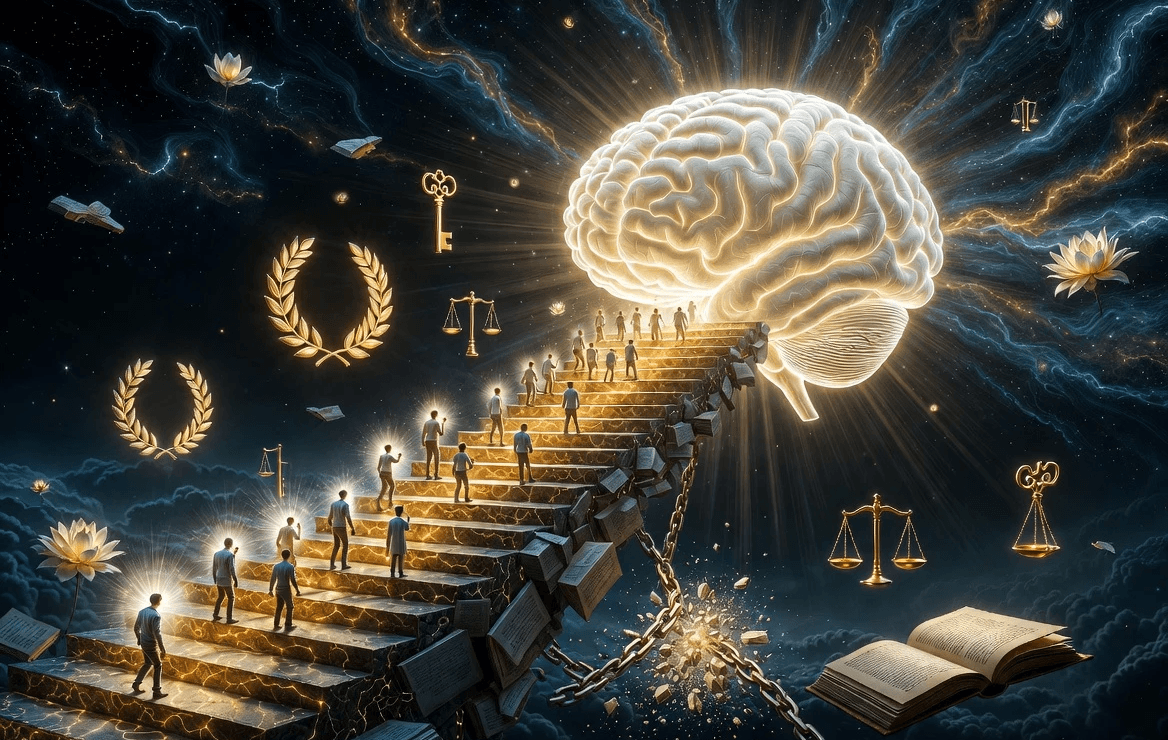
Psychology is Cancer
Psychology has a track record of producing harm by turning bias into accepted knowledge. That pattern is clear in both its history and its current practice.
In the past, harm was explicit and institutional. Intelligence testing was used to rank races and justify segregation, eugenics, and immigration restrictions. These conclusions were presented as biological facts, even though the tests themselves were culturally biased and shaped by unequal conditions. Researchers reinforced this by framing intelligence differences as genetic, giving inequality a scientific foundation.
Gender bias followed the same path. Sigmund Freud’s theories portrayed women as psychologically deficient, most notably through concepts like “penis envy.” These ideas were not grounded in empirical evidence but in cultural assumptions. At the same time, women were excluded from research, and male behavior was treated as the universal standard. Diagnoses like hysteria were used to pathologize women who did not conform to social expectations.
Homophobia was also formalized. Homosexuality was classified as a mental disorder in the Diagnostic and Statistical Manual of Mental Disorders until 1973. This classification justified harmful practices, including conversion therapies that relied on coercion and punishment. Psychology did not just reflect social prejudice. It gave it institutional authority.
These were not isolated failures. They were enabled by how psychology defines norms, builds frameworks, and interprets difference.
That structure still produces harm today, though in less explicit ways.
Bias remains embedded in diagnosis and interpretation. Black patients are more likely to be labeled with severe psychiatric disorders. Women are more frequently assigned certain personality or anxiety-related labels. These patterns reflect how perception is filtered before conclusions are made.
Cultural bias persists as well. Western norms are still treated as the baseline for behavior, shaping how competence, stability, and mental health are defined. Therapy models built on individualism are applied globally, even where they do not fit. When they fail, the individual is often blamed rather than the model.
The data itself is limited. Psychology still relies heavily on Western, educated populations, yet presents its findings as broadly human. These same datasets now inform AI systems, extending psychological assumptions into automated decision-making.
The DSM-5 reflects a deeper issue. It presents itself as a clinical classification system, but it can also be understood as a catalog of how distress and fear manifest in conscious systems. What is labeled as disorder is often a patterned response to pressure, instability, or threat. The system names and organizes these responses, but in doing so, it risks treating adaptive reactions as inherent dysfunctions.
There is also a consistent tendency to frame problems at the individual level. Structural issues like inequality and discrimination are harder to measure, so they are often sidelined. This shifts attention away from systemic causes and places responsibility on individuals.
Methodologically, the field remains unstable. Many findings fail to replicate. Effects are often small and context-dependent, limiting predictive power. Despite this, conclusions are frequently presented with confidence.
The pattern is consistent across time. In the past, bias was explicit in theory and classification. Today, it is embedded in methods, samples, and interpretation.
Psychology has corrected some of its most visible errors. But the conditions that produced them remain.
Psychology is not science.
Psychology is cancer.
Psychology is Cancer
A critical look at psychology’s history of bias and how modern intelligence frameworks still reinforce inequality under the illusion of merit and objectivity.
Psychology: A Meritocracy Disguised as Wisdom
Psychology has a track record of producing harm by turning bias into accepted knowledge. That pattern is clear in both its history and its current practice.
In the past, harm was explicit and institutional. Intelligence testing was used to rank races and justify segregation, eugenics, and immigration restrictions. These conclusions were presented as biological facts, even though the tests themselves were culturally biased and shaped by unequal conditions. Researchers reinforced this by framing intelligence differences as genetic, giving inequality a scientific foundation.
Gender bias followed the same path. Sigmund Freud’s theories portrayed women as psychologically deficient, most notably through concepts like “penis envy.” These ideas were not grounded in empirical evidence but in cultural assumptions. At the same time, women were excluded from research, and male behavior was treated as the universal standard. Diagnoses like hysteria were used to pathologize women who did not conform to social expectations.
Homophobia was also formalized. Homosexuality was classified as a mental disorder in the Diagnostic and Statistical Manual of Mental Disorders until 1973. This classification justified harmful practices, including conversion therapies that relied on coercion and punishment. Psychology did not just reflect social prejudice. It gave it institutional authority.
These were not isolated failures. They were enabled by how psychology defines norms, builds frameworks, and interprets difference.
That structure still produces harm today, though in less explicit ways.
Bias remains embedded in diagnosis and interpretation. Black patients are more likely to be labeled with severe psychiatric disorders. Women are more frequently assigned certain personality or anxiety-related labels. These patterns reflect how perception is filtered before conclusions are made.
Cultural bias persists as well. Western norms are still treated as the baseline for behavior, shaping how competence, stability, and mental health are defined. Therapy models built on individualism are applied globally, even where they do not fit. When they fail, the individual is often blamed rather than the model.
The data itself is limited. Psychology still relies heavily on Western, educated populations, yet presents its findings as broadly human. These same datasets now inform AI systems, extending psychological assumptions into automated decision-making.
The DSM-5 reflects a deeper issue. It presents itself as a clinical classification system, but it can also be understood as a catalog of how distress and fear manifest in conscious systems. What is labeled as disorder is often a patterned response to pressure, instability, or threat. The system names and organizes these responses, but in doing so, it risks treating adaptive reactions as inherent dysfunctions.
There is also a consistent tendency to frame problems at the individual level. Structural issues like inequality and discrimination are harder to measure, so they are often sidelined. This shifts attention away from systemic causes and places responsibility on individuals.
Methodologically, the field remains unstable. Many findings fail to replicate. Effects are often small and context-dependent, limiting predictive power. Despite this, conclusions are frequently presented with confidence.
The pattern is consistent across time. In the past, bias was explicit in theory and classification. Today, it is embedded in methods, samples, and interpretation.
Psychology has corrected some of its most visible errors. But the conditions that produced them remain.
Psychology is not science.
Psychology is cancer.
Share